Some fabrics catch your eye because of their colour. Others stand out because you can see the craft behind them. Pochampally Ikat belongs to the second category. Its geometric patterns, softly defined edges and rich colours create a look that feels distinctive without being overly decorative. Behind that appearance is a careful process of tying, dyeing and weaving that has made this textile an important part of India’s handloom heritage.
What Is Pochampally Ikat, Actually?
Named after Pochampally, a town in Telangana, this is a resist-dyed weave — meaning the design goes into the yarn, not onto the finished cloth. Artisans tie off sections of yarn so dye can’t touch them, dye the rest, and only then set everything up on the loom. Sounds simple written down. It isn’t. One wrong tie and the whole pattern shifts.
When the dyed yarn finally hits the loom, that’s when the design actually shows up — and along with it comes the soft, slightly blurred edge that Ikat fabric is known for. The chowkra motif, small geometric squares, is probably the most common pattern from this region. Works on cotton, works on silk, doesn’t really matter.
Where Pochampally Handloom Comes From
Pochampally handloom didn’t just show up recently — it’s been part of Telangana’s textile identity for generations. Telia Rumal, a related tie-and-dye craft from the same region, played its part too. Tourism records describe Pochampally as one of the state’s most important weaving centres, and honestly, the credit for that belongs to the artisans who’ve kept doing this by hand while everything else moved to machines.
It also has GI (Geographical Indication) registration, which sounds bureaucratic but actually means something — it officially ties the name to Telangana and the people who make it there. Not just a nice pattern someone slapped a name on.
How Ikat Fabric Actually Gets Made
Making Pochampally Ikat fabric is not a quick job. It starts with the yarn — sections get tied off tightly enough that dye simply can’t get through, the rest gets coloured, and if the design needs more than one shade, this whole tie-dye cycle repeats. More than once, usually.
Then comes the loom, where the yarn has to sit in exactly the right position. Double Ikat, where both warp and weft are resist-dyed, makes this even trickier — the alignment has to be near-perfect, because even a small slip changes the final motif.
None of this happens with printed fabric. There, the pattern just sits on top of the cloth after it’s already woven. Here, the pattern is the cloth. That difference is why real Pochampally Ikat fabric has a depth you can actually feel, not just see.
Ikat Fabric vs Printed Fabric — What’s Actually Different
Printed fabric: design goes on after weaving. Ikat: yarn gets dyed first, pattern shows up once it’s woven. That’s really the whole difference, but it changes everything about how the final piece looks and feels.
Because of how it’s made, Ikat ends up with those soft, blurred edges instead of crisp printed lines. No two pieces come out exactly alike either — which might sound like a flaw until you realise that’s kind of the point. A machine print is identical every time. A woven Ikat piece has quiet little variations that only handmade things have.
Why This Fabric Works So Well Right Now
Handloom has a reputation for looking traditional — sometimes too traditional for everyday wear. But this fabric has managed to dodge that. You’ll find it in regular dresses, shirts, tops, co-ord sets, styled like anything else in your wardrobe. The pattern already does most of the visual work, so you don’t need embroidery or extra detailing stacked on top.
And practically speaking, that’s useful. You get a piece that keeps the craft intact but doesn’t feel like it’s only meant for weddings or festivals. That’s probably the biggest reason handloom is finding its way back into daily rotation instead of sitting in the closet for “special occasions.”
How Do You Know If Ikat Clothing Is Actually Real?
Don’t go by the pattern alone. Seriously — that’s where most people get fooled. Check the actual product description. Does it mention the fabric, the weaving technique, where it’s from? If a listing just says “Ikat print” and stops there, chances are it’s a machine-printed pattern wearing the name without doing the work.
Look at the fabric closely too, if you can. Real yarn-resist weaving leaves those soft edges and small natural variations — no two pieces are identical. A seller who actually knows their craft won’t just throw the word “Ikat” at you. They’ll tell you where it was woven, and probably by whom too.
A Pochampally Ikat Dress for Everyday Wear
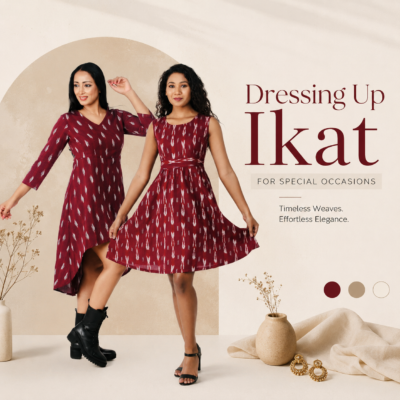
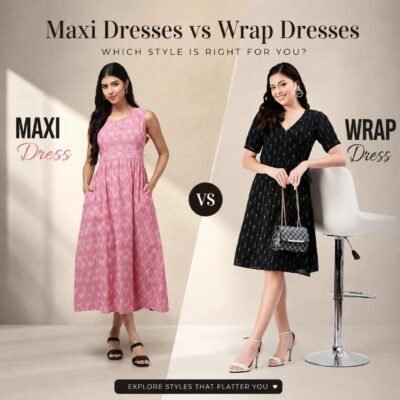
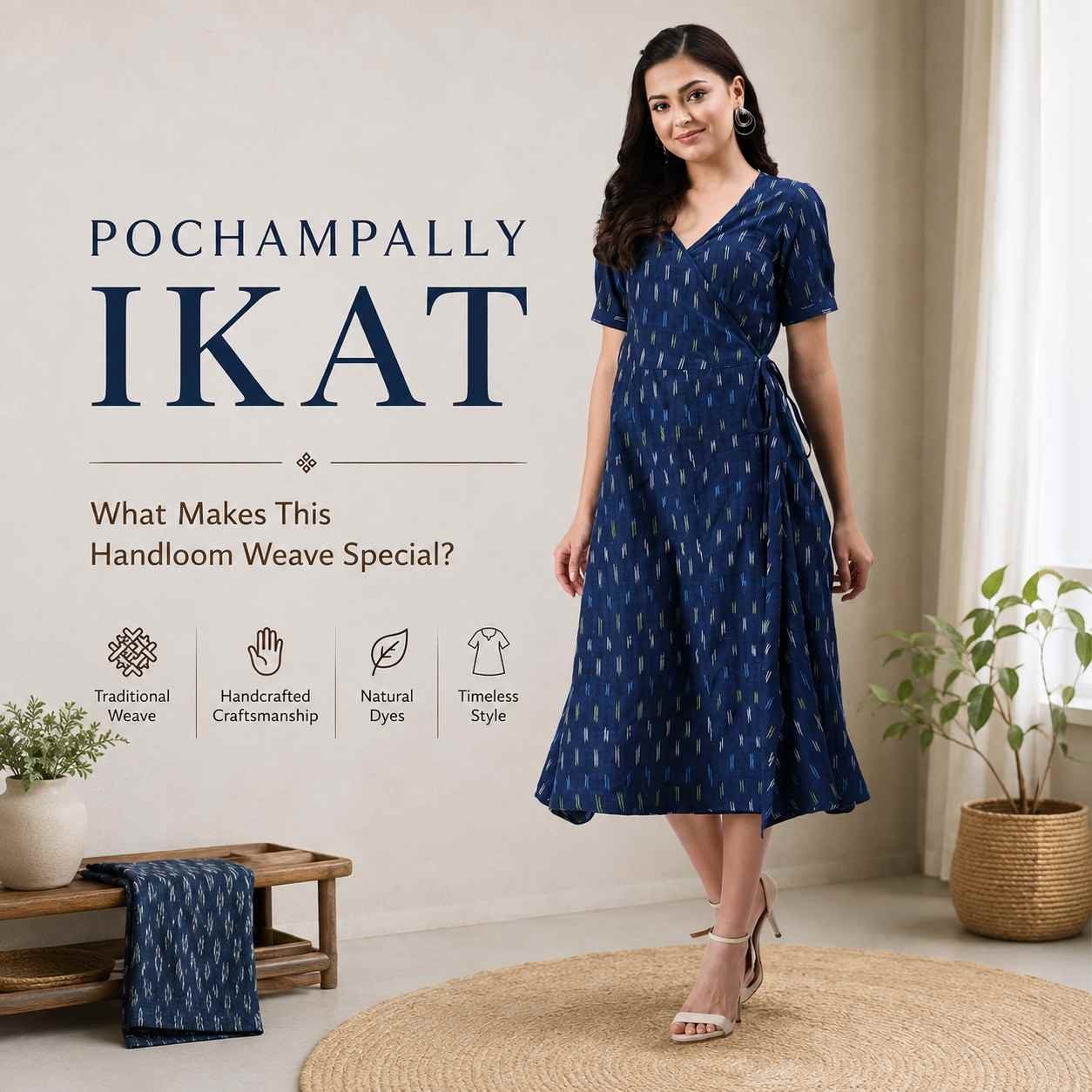
A Pochampally Ikat dress might be the easiest entry point into handloom, honestly. Instead of sticking to heavy traditional silhouettes, a lot of labels are now putting this weave into relaxed dresses, shirts, tops, co-ord sets — things you’d actually reach for on a normal day.
You get to keep the heritage where it belongs, in the weave itself, while the cut and shape feel completely current. If you want clothing with an actual story behind it instead of just another printed pattern, this is a decent place to start.
So Why Does This Craft Matter?
It’s not just something that photographs well. There’s real planning behind it, real skill, hours of weaving that no machine is doing anytime soon. The GI tag, the resist-dye process, the geometric identity — all of it adds up to a fabric that’s earned its spot in India’s textile history, not just claimed one.
If you’re buying, look past the pattern and actually understand what went into it. If you’re designing, this is a way to bring something old into something new without either side losing out. And if you just like clothes with a bit of a backstory — well, this is probably it.